
Windows is transforming how third-party security software functions with the operating system to decrease the risk of system-wide failures and crashes. Microsoft has launched the Windows Endpoint Security Platform, which enables security providers to use Windows-managed features for certain protection functions without depending heavily on their system’s kernel-mode components.
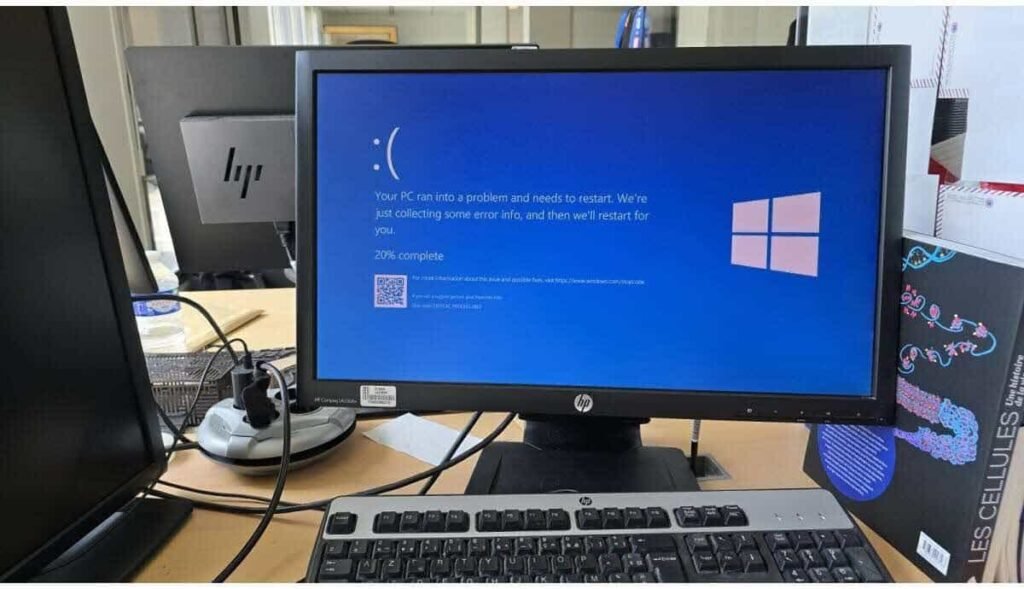
The modification is particularly significant after the CrowdStrike event in July 2024, when a broken security update caused millions of Windows devices globally to crash. Microsoft’s latest method’s purpose is to improve system resilience while enabling security software to keep protecting and monitoring Windows.
Microsoft launches Windows Endpoint Security Platform
Microsoft introduced the general availability of the Windows Endpoint Security Platform on November 17, 2026. The platform is now integrated with Windows-managed APIs that security vendors can use for compatible protection circumstances, decreasing the requirement to place all their own code inside the Windows kernel.
The Windows kernel is a core part accountable for managing memory, hardware and critical operating-system operations. Software functioning at this stage has extensive access to the system. Moreover, a faulty kernel driver can cause serious issues, including startup failures, blue screens and system failures.
Related: Windows security architecture
Unverified Third-party antivirus and endpoint security products have previously depended on kernel-level components to review system activity and identify threats. Although this method provides deep visibility, a faulty update or driver that can also affect the Windows system itself.
Microsoft’s new platform is developed to lower that risk by enabling compatible security operations to work through Windows-managed capabilities.
How the latest security platform functions
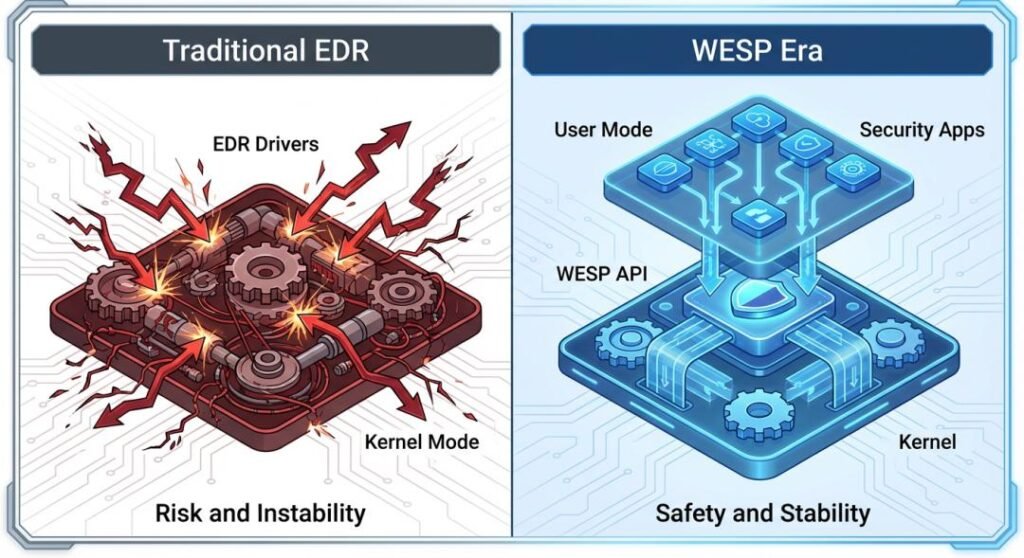
The Windows Endpoint Security Platform offers security vendors with compatible mechanisms to review and react to activity involving segments such as Object Manager, the registry, processes and the file system.
Instead of depending completely on their own kernel components for these compatible functions, security products can get notifications through the platform and use protection rules wherever required.
This transforms how security software responds to Windows without removing the requirement for kernel-level protection completely. Vendors may continue to operate kernel components for functions that need them, while compatible operations can be used by the Windows-managed platform.
Microsoft mentions the method is developed to secure the protection capabilities security products rely on while decreasing the impact of failures in deeply integrated software.
Related: Windows Endpoint Security Platform requirements
Windows can recover if security software causes startup problems
One of the essential components of the platform is its recovery mechanism. Microsoft mentions Windows includes recovery tools developed to restore the system if a protection rule or security client causes an issue during startup.
This matters because a buggy security component can occasionally stop Windows from booting normally. In such circumstances, users may be redirected to the Windows Recovery Environment, troubleshoot the problematic driver manually or attempt Startup Repair.
The latest platform is developed to decrease the occurrence of such failures affecting the entire device and enhance recovery when issues arise.
However, this does not state that Windows can automatically repair every antivirus-related crash, driver conflict or blue screen. The recovery mechanisms apply to compatible circumstances within the platform, and their effectiveness relies on how security providers execute the capabilities.
Which security companies are adopting the platform?
Microsoft is currently working with various security providers to implement their products into the new platform.
Security vendors including CrowdStrike, Bitdefender, ESET, SentinelOne, Sophos, TrendAI, and Trellix have been recognised as partners working toward implementation.
The availability timeline is distinct between various providers. Several integrations are expected to release during late 2026, while others are expected for 2027.
This points out that users should not expect every antivirus program to move away from kernel-mode components immediately after the platform becomes available to every user. implementation an adoption stays independent on individual security vendors.
What does this mean for Windows users?
For common Windows users, the platform is mainly associated with reliability despite a new option to enable. Microsoft is developing a more controlled approach for security software to respond to the operating system.
The change does not require users to change their existing Windows security configuration or uninstall their antivirus software. Its benefits will become more noticeable as security providers adopt the APIs and integrate them into their products.
The wider purpose is to decrease the chances that a protection component or faulty security update will cause a system-wide crash while handling the security capabilities Organisations and Windows users need.
Microsoft’s Windows Endpoint Security Platform brings an important change in the way third-party security software can interact with Windows. As more vendors implement it, the platform could reduce the impact of crashes caused by security components and make Windows recovery more trustworthy.